


China travel tips
you can trust

Huangshan
tips and insights
 How to pronounce
Huangshan: whah'ng-shahn
Artistic inspiration
Huangshan has been an inspiration to artists and writers for over a millennium. The following lines were written by Li Bai (701-762), one of China's greatest ancient poets:
A thousand meter high Huangshan, With its thirty-two magnificent peaks, Blooming like golden lotus flowers, Amidst red crags and rock columns
Mountainscape
It changes vividly by the season. The green deciduous trees of summer become painted with red, purple and yellow hues during the fall foliage period. Winter brings snow, which dusts the peaks and trees and accentuates the rugged rock formations. Winter is also the prime time for viewing the sea of clouds. Spring brings perfumed wild flowers and the roaring sound of cascading water.
Game
The game of identifying the fanciful shapes of the grotesque rocks and wind contorted pine trees is popular with Chinese tourists.
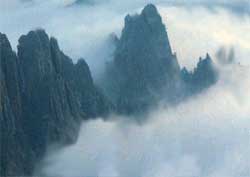
Mystical sea of clouds
It forms when a cold air mass presses clouds down between the peaks and their ridges.
 for next Huangshan page
Wonders of China - Top 10 rankings
China Wonder location map
Chinese cuisine guide
Basic Chinese phrases with pronunciations


World's Top 100 Wonders
World's Top 1000 Wonders
Site map
My credentials
About my website and criteria
Reader testimonials