


China travel tips
you can trust

Why the
Small Wild Goose and
Big Wild Goose Pagodas
are special
These two giant Buddhist pagodas in Xi'an date back about 1300 years during the Tang Dynasty. They are the only tall pagodas of the historic Tang era still standing.
Wild Goose Pagodas
tips and insights
 Optical illusion
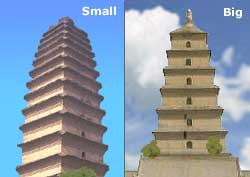
In photographs, the Small Wild Goose Pagoda looks taller than the Big Wild Goose, but it is actually one third shorter. This optical illusion occurs because the small pagoda has 13 floors while the big one has just 7 floors. Yet, the small pagoda's individual floors are exceptionally short in height.
View
Walk up the Big Wild Goose Pagoda's spiral staircase for an excellent view of Xi'an and countryside. Do this early or late in the day during the tourist season to avoid long waits.
Location
The two Wild Goose Pagodas are a 5 to 10 minute drive south from the inner city of Xi'an, the capital of Shaanxi province.
They stand a couple of kilometers (a little over a mile) apart.
 for next Wild Goose Pagodas page
Wonders of China - Top 10 rankings
China Wonder location map
Chinese cuisine guide
Basic Chinese phrases with pronunciations


World's Top 100 Wonders
World's Top 1000 Wonders
Site map
My credentials
About my website and criteria
Reader testimonials