


Fjords of Norway
Travel tips you can trust

Why the
Fjords of Norway
are special
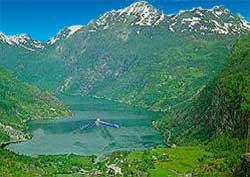
Glaciers slowly carved the Fjords of Norway out of hard-rock coastal mountains. The resulting narrow fjords are walled in by incredibly steep cliffs, verdant slopes and snow-capped mountain tops.
To get a sense of scale, note the boat in the photo. It may look like a modest yacht but is a large ocean-going ship.
Top 5
Fjords of Norway
 Sognefjord
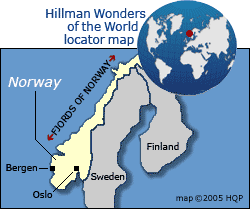
If you have time to visit only one fjord, let it be Sognefjord, which is only about 70 kilometers (45 miles) north of Bergen. It stretches 204 kilometers (125 miles) inland, has stunning fjordscapes, and small villages.
 Naeroyfjord
It's one of the arms of Sognefjord. Naeroyfjord, is a tourist favorite because of its narrowness and skyscraping cliffs.
 Geirangerfjord
It is much farther north of Bergen (and is much shorter in length) than Sognefjord, but is worth the journey. Many Norwegians consider it to be their country's most beautiful fjord. It is blessed with many tall, cascading waterfalls (the Seven Sisters is the most striking). Partially because of its significant depth, Geirangerfjord is a pet among the large ocean going cruise ships.
 Lysefjorden
It is famous for Pulpit Rock, an outlook with the grandest view in the Fjords of Norway region. It requires a long uphill hike. Standing at the edge of Pulpit Rock, you look 600 meters (2000 feet) straight down into a majestic fjord. Lysefjorden lies south of Bergen.
 Hardangerfjord
Its fjordscape is dramatic, but less so than those of Sognefjord and Geirangerfjord. However, its low lying farms, orchards, and grazing slopes lend a lovely rural touch to the landscape. Hardangerfjord is south of Bergen.
 Location
Learn More
 for next Fjords of Norway page

World's Top 100 Wonders
World's Top 1000 Wonders
Site map
My credentials
About my website and criteria
Reader testimonials