


Travel tips you can trust

Why the
Zwinger
in Germany is special
The Zwinger in Dresden, Germany is a triumph in Baroque architecture and has museums with outstanding collections.
 Top
two
Top
two
architectural marvels
Spend time relising these Zwinger highlights:
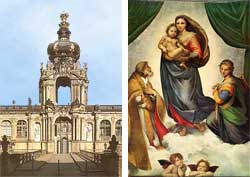
 Crown Gate
See photo above.
Nymphenbad
Visit the statue-rich "Bath of Nymphs".
Museums
Although they have different focuses, they have something in common: All have world-class collections.
One
museum specializes in 16th to 18th century armory and weaponry, from Germany and
beyond.
Another
displays antique porcelains from Saxony and the Far East.
Yet another
features historic scientific instruments and clocks.
And, there's
the art museum with artworks of great masters, including Rubens,
Rembrandt and Raphael. The last artist created the Zwinger's most
prized possession, the Sistine Madonna (see photo).
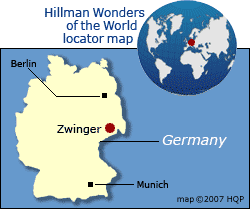
Location in Germany
 for next Zwinger page
Germany wonders - Top 10 rankings
Basic German phrases
Germany wonder map
German cuisine


World's Top 100 Wonders
World's Top 1000 Wonders
Site map
My credentials
About my website and criteria
Reader testimonials