

|

Why the Grand Canyon
is special
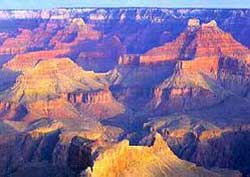
"Grand" is an understatement. At its extremes, the Grand Canyon is 446
kilometers (277 miles) long, up to 29 kilometers (18 miles)
wide from rim to rim. and over 1600 meters (a mile) deep.
Vastness is just one of the mind boggling elements of the Grand
Canyon that render many visitors nearly speechless. The setting is desolate, the
contours are rugged, and the striated hues of the gorges and pinnacles are vibrant.

Grand Canyon
origin

It was slow in the making. It took the erosive effects of the Colorado River millions of years
to carve a deep swath through billion-plus year-old rock layers.

The
process began in two stages, one roughly 17 millions years ago, the second,
about 6 million years ago.

Grand Canyon
vantages

The view is best from the South rim - it has the most breathtaking vantage points. And, unlike the case on
the north rim, the sun is over your shoulder, which is best for both sightseeing and
for taking photos.

For the most awesome and thrilling perspective, fly below its rims in a sightseeing helicopter (best
bet) or small plane.

To appreciate the
size of the nearly
500-kilometer (300-mile) long Grand Canyon, view it at 35,000 feet aboard a commercial jet.
Note: The flight paths of many transcontinental planes to and from major
Southern Californian cities skirt this natural wonder.

Visiting the
Grand Canyon floor

For
an exciting trip, take the mule ride to the Grand Canyon floor. The
trip is not recommended if you have a fear of heights because some sections of
the trail are narrow and have steep drop offs without rails.

You
can also hike to the bottom, but the roundtrip requires too much physical
exertion and too many hours for other than a highly fit trekker. It's best to
descend one day, camp overnight (permit required), then hike up the next day.

Another
option is to travel down the Grand Canyon in an inflatable
boat. Running the Colorado River rapids is a harrowing experience, which is part of the fun.
Most trips last 5 to 8 days, some longer. One outfit offers a shorter itinerary
- you helicopter in, do some rafting, then helicopter out.

It
can be scorching down there. July temperatures reach 41°C (106°F) and higher.

You'll
be in the wild. Though rare, it's possible to cross the paths of rattlesnakes and mountain lions.

Grand Canyon
summertime
tips & insights
June to mid September is the peak tourist season. Keep in mind:

Make
your summer reservations early for the in-the-park lodges and camps because they become
completely booked months in advance. The same can be true for the
accommodations outside the park for weekends and holidays. Sadly, many
tourists arrive expecting miracles.

Enter
the park early if you are a day tripper. Otherwise, you may have trouble
finding a parking space.

Traffic
congestion can be nerve-racking. Leave your car parked and take the free shuttle bus
to the major lodges and lookout points so you won't have to repeatedly search for a
parking space.

Bring
an umbrella. Heavy rains occur mostly in the summer, particularly in August.

Other Grand Canyon
tips & insights

If
you are thinking about coming in the winter to avoid the crowds, remember it is
cold and can be snowy with icy roads. Moreover, daylight is short and winter storms
can obscure the view.

The
best all around periods are May and mid-September to mid October. Crowds are
relatively thin and the weather is pleasant (though, remember, the Grand Canyon
weather can be unpredictable).

Over
four million tourists visit the Grand Canyon per year. About
9 out of 10 of them choose the South Rim.

The
distance between the North Rim and South Rim main facilities is about 25
kilometers (15 miles) as the bird flies. By car, it's over 300 kilometers (200 miles).

The
park has a rim trail for those who want a less populated view of the Grand Canyon.

The
best time to see or photograph the Grand Canyon is in the early morning or late
afternoon on sunny days. The low angled sun rays intensify the hues of the rock layers.


View my other gold,
silver & bronze medal
winners in the USA


View next
world wonder


|