


Mezquita of Cordoba
Travel tips you can trust

Why the
Mezquita of Cordoba
is special
It is of both historical and architectural interest, in a significantly eclectic way.
Mezquita of Cordoba
tips and insights
 History in brief
The site of La Mezquita originally bore a church. Then, after the Moors conquered Cordoba in the 8th century, they demolished the church and built the Mezquita (mosque). Five centuries later, the Christians regained ownership.
During the
Moor period
The Mezquita of Cordoba was enlarged and enhanced into a vast, magnificent house of worship.
Multiple
architectural styles
The Moors creatively used a variety of architectural styles including Persian, Mid Eastern Islamic, Roman and Gothic that together helped define Moorish architecture.
The arches
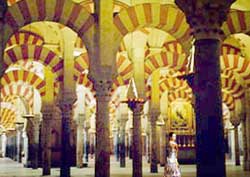
One of the most striking design elements of La Mezquita is the double-tiered "candy stripe" arches supported by sculptured pillars (see photo).
Chistians
regain control
The Christians rewon Cordoba in the 13th century and promptly consecrated the edifice as a church but left much of the superb Moor-erected architecture intact. Their major alteration was building a cathedral within the mammoth mosque.
Today
The building is peacefully divided between Muslims and Catholics (who use the bizarrely situated cathedral).
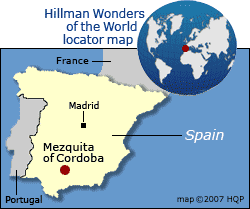
Location in Spain
Know these
Spain tips and insights
Wonders of Spain - Top 10 rankings
Spain wonder map
Basic Spanish phrases
Spanish cuisine


World's Top 100 Wonders
World's Top 1000 Wonders
Site map
My credentials
About my website and criteria
Reader testimonials