


Qin
Terra Cotta Warriors
Travel tips you can trust

Why the
Qin
Terra Cotta Warriors
in China are special
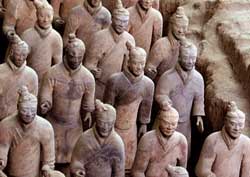
The Qin Terra Cotta Warriors site near Xi'an city has nearly 8,000 life-sized pottery warriors and horses in battle attire and formation. They had been buried for over 2,200 years.
This terra cotta statuary is considered to be the most important archaeological discovery of the 20th century.
Origin
 Why
they were created
Why
they were created
The pottery warriors and horses (along with wooden chariots) were buried to protect the 3rd century BC Emperor Qin in his afterlife. He is historically important because he was the first ruler to unite China.
Discovery
1974
The site was discovered accidentally in 1974 when several local peasants were digging a well and came across some pottery relics. Archaeologists quickly determined their ancient origin and began excavating the site.
Underground chambers
So far, four have
been unearthed
 Vault #1
This is the main and largest. It houses 6,000 life-sized terra cotta warriors (see photo). Originally, they were colorfully painted. The underground combat-ready soldiers are accompanied by sculpted horses, chariots and more.
Vault #2
Smaller with less statuary
Vault #3
Even smaller.
Vault #4
Found empty.
Location in China

Learn More
 for next Terra Cotta Warrior page
Know these China tips and insights
Wonders of China - Top 10 rankings
China Wonder location map
Chinese cuisine guide
Basic Chinese phrases with pronunciations


World's Top 100 Wonders
World's Top 1000 Wonders
Site map
My credentials
About my website and criteria
Reader testimonials