


Segovia Aqueduct
Travel tips you can trust

Why the
Segovia Aqueduct
is special
The Segovia Aqueduct was built by the Romans nearly 2,000 years ago and is in remarkable condition considering its age. It is one of the greatest engineering feats of the ancient world.
Segovia Aqueduct
tips & insights
 Construction
The Romans used no mortar, metal clamps, or other devices. Only gravity holds the 20,000-plus chiseled granite stone blocks together.
Purpose
The Segovia Aqueduct conveyed water to the town from the mountains 17 kilometers (11 miles) away.
Arches
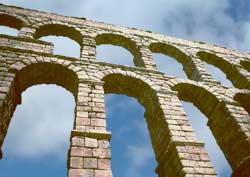
The last portion of the aqueduct (nearly 1 kilometer or a half-mile in length) is elevated to pass over a terrain depression and part of the town. It comprises both single and double-tiered arches. The latter (see photo) needs to be piggybacked for strength because it soars as high as a modern 9-story building. All told, there are 119 arches.
Still functioning
Amazingly, the Segovia Aqueduct is still capable of conveying water today. However, some experts are deeply concerned about the negative effects of pollution and other modern day plights on the structure.
Seqovia
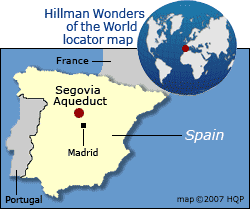
The town is only an hour's drive from Madrid, making this town a well-traveled daytrip. Its other attractions include the Segovia Alcazar and the cathedral. The first is a Hillman Wonders bronze medal winner, the second is a close runner-up.
Location in Spain
Know these
Spain tips and insights
Wonders of Spain - Top 10 rankings
Spain wonder map
Basic Spanish phrases
Spanish cuisine


World's Top 100 Wonders
World's Top 1000 Wonders
Site map
My credentials
About my website and criteria
Reader testimonials