


Grand Tetons
Travel tips you can trust

Why
Grand Tetons
are special
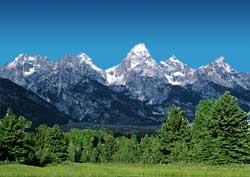
The snowcapped, jagged Grand Tetons in northwestern Wyoming in America are one of the world's most scenic mountain ranges.
 Name
Name
Many non-French-speaking tourists are unaware that French fur trappers named the range after a part of the female's anatomy.
Highest peak
The highest peak is 4198 meters (13,770 feet) high and is simply called the Grand Teton. It is clustered with other skyscraping summits (see photo). Locals call it by an even simpler name, "The Grand".
Valey-to-peak height
Although their maximum height is less than half that of Mount Everest, the Grand Tetons rise about 2200 meters (7,000 feet) sharply above the Jackson Hole Valley floor.
And, there are no foothills in the foreground to lessen the impact of their majestic presence and the seven reflecting lakes that lie at its feet.
Climbing
The peaks are a paradise for serious mountain climbers. Many come here to hone their skills before heading off to the Himalayas.
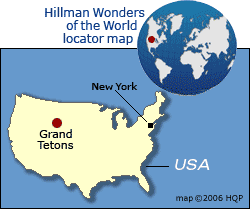
Location in America
Learn More
 for Grand Tetons tips - Page 2
Learn my other
America tips & insights
America Wonders - Complete list
America wonder map
Top 10 Famous American foods


World's Top 100 Wonders
World's Top 1000 Wonders
Site map
My credentials
About my website and criteria
Reader testimonials