


Ayers Rock / Urulu
Travel tips you can trust

Why
Ayers Rock
is special
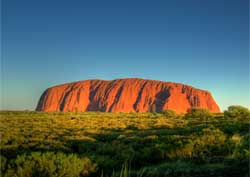
The icon of Australia is the world's second largest free standing monolith. Ayers Rock rises solitarily 348 meters (1141 feet) above the desert plain and is over 9 kilometers (5 miles) in circumference. It's also known for its sacredness and changing colors.
Official name
 Uluru name
Ayers Rock's official appellation is Uluru, the one given by the Anunga Aborigines of Australia. Note: I use "Ayers Rock" in my website because it's far, far more recognized than "Urulu" by travelers around the world.
Think twice about
visiting Ayers Rock in
the height of summe
Scorchingly hot
That's mid-December to mid-March in the southern hemisphere. Average midday temperatures are close to 38°C (100°F) and have soared as high as 45°C (113°F). Remember, you're in a desert.
Climbing Ayers Rock
Sacred
The rock is sacred to the local Anunga Aborigines.
Climbing
The Anungas discourage (but do not prohibit) visitors from climbing their sacred mountain. Roughly 1 out of 10 visitors do climb the rock, using an ancient Aborigine trail. A few slip and lose their lives each year. Once on top, the view is staggering. Note: The trail is closed when it is windy, rainy or excessively hot.
If
you elect
not to climb
There are several interesting ground level paths. One stretches completely around the monolith. An Aborigine guide will explain his culture's mythology relating to the rock and will show you rock paintings.
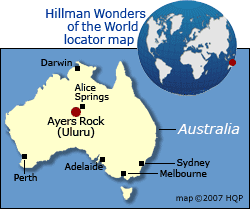
Location in Australia
Learn More
 for Ayers Rock - Page 2
Learn my other
Australian tips and insights
Wonders of Australia - Top 10 rankings
Australian Wonders - Map
Learn Australian slang
Australian Cuisine
Photo by Alex Healing - CC BY 2.0


World's Top 100 Wonders
World's Top 1000 Wonders
Site map
My credentials
About my website and criteria
Reader testimonials