

World's Top Wonders
to see before you die

How many have you seen?

View Top 100 Wonder rankings
View Top 1000 Wonder list

Region & Country
Wonder Guides

How many of their wonders have you seen?

Antarctica
Australia
Canada
China
Czech Republic
England
Germany
Greece
Italy
Philippines
Polynesia
South Africa
Spain
USA
Vatican

Cruise Guides
What to know before you book

Cruises (main section)
Alaska cruise
Antarctica cruise
Luxury cruise
Romantic cruise

Special Topic Guides
Learn my candid tips & insights

Safari tips
What it's like on a ...
Bali tips
Galapagos tips
New York tips
Photo tips
Top 10 travel lists
Travel quiz
Travel quotes
Ancient Seven Wonders
World Cuisine insights

More

About Howard Hillman
Email me your opinion


Mount Taishan


NEXT Wonder - Pingyao Ancient City
Clickable China Wonder map
China MENU


Why
Mount Taishan
is special

Mount Taishan is the most sacred of China's five famous holy mountains. It's also renowned for its scenic beauty and 5,000 steps leading to the Taishan summit.


Mount Taishan
tips & insights


Emperors

Over the course of two thousand years, emperors came to worship on Mount Taishan. Some built pavilions, the most heralded being Five Pines, which dates back to the Qin Dynasty (221 to 206 BC).


Two best known Taoist sites

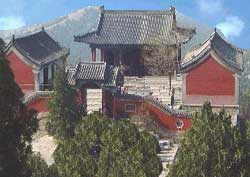
Dai Temple at the base of Mount Taishan and Azure Cloud Temple at its peak (see photo) are Mount Taishan's two best known Taoist sites.


Climbing Mount Taishan

Despite the steep, lengthy stairs, many pilgrims and tourists make the climb. It takes the average visitor 4 hours up, 2 hours down to conquer the 5,000 steps. If 5,000 steps are beyond your physical endurance, you can take a cable car. It cuts the number of stairs you have to climb in half.


Views

On clear mornings
it's best to be on the summit to catch Mount Taishan's famous sunrise vista (summit guest houses are available for sleep overs).
On foggy mornings
it's best to be at the foot of the mountain to see the misty clouds serenely dance around the mountain slopes.

Artists

Leading Chinese artists over the centuries have painted the cloud shrouded Mount Taishan.


Name

 "Taishan" means "Mount Tai" (the Chinese word "'shan" means "mountain"). For clarity's sake, the redundant "Mount" is added for the English translation ("Mount Taishan"). Some travelers confuse this Taishan for the large city in Canton (Guanzhou) province that also bears the name "Taishan".


Location

Mount Taishan is in Shandong province and about 500 kilometers (300 miles) southeast of Beijing.


Pronunciation guide

Taishan:  tye-shan 

China Menu

NEXT China wonder


Forbidden City
Great Wall of China
Hong Kong Harbor
Lijiang & Shangri-La
Li River Cruise
Mount Everest [with Nepal]
Potala Palace of Lhasa
Qin Terra Cotta Warriors
Yangtze River Cruise

Hanging Monastery
Lama Temple
Leshan Great Buddha
Pudong/Shanghai Skyline
Shanghai Museum
Summer Palace
Suzhou Gardens & Canals
Temple of Heaven

Baishui Terrace
Bund River Front
Chengde Mountain Resort
Dazu Rock Carvings
Ganden Monastery
Hong Kong Restaurants & Shops
Huangshan Mountain Range
Jade Buddha Temple
Jiayuguan Fort
Jiuzhaigou
Jokhang Temple
Kaifeng Historical Sites
Labrang Monastery
Long Ji Rice Terraces
Longmen Caves
Mogao Caves
Mount Taishan
Pingyao Ancient City
Reed Flute Cave
Sanjiang Bridges
Sera Monastery
Shanghai Old City
Shenyang Imperial Palace
Shibaozhai Temple
Shouxi Lake
Silk Road
Stone Forest
Tashilumpo Monastery
Three Gorges Dam
Three Pagodas
Tiananmen Square
Tian Tan Buddha Po Lin
Tiger Leaping Gorge
West Lake
Wild Goose Pagodas
Wudang Ancient Complex
Wulingyuan Scenic Areas
Xi'an City Walls
Xishuangbanna
Yangshou
Yuan Yang Rice Terraces
Yungang Caves


Clickable China Wonder map
China Wonder Guide - Home Page
Chinese Phrases for Travelers
Chinese Cuisine


Top 100 Wonders list
Top 1000 Wonders list
Wonder Guides to 17 countries
Special Topic Guides
Site Map
About Howard Hillman
What Readers Say
Email me your opinion


sponsored ad 


Explore my
candid country, region
and other travel guides

Click links for tips & insights


©2009 HQP / Hillman Quality Publications