

Canadian Cuisine


A helpful guide to the

cuisine of Canada

for diners and travelers

by an established authority

Why

Canadian cuisine

is special

Canada - the world's second largest country geographically - is a melting pot of diverse culinary heritages from Europe, Asia and North America.

Canadian cuisine heritage

British and French settlers influenced Canadian cuisine the most. The British imprint is today evident on the Atlantic and Pacific coasts while the French mark is obvious in Quebec Province. However, much credit belongs to the native First Nations and Intuit peoples who helped teach the British and French settlers how to forage, farm, hunt and cook the distinctive bounty of Canada.

Famous specialties

that help define

Canadian cuisines

Many of the specialties listed below are now popular throughout Canada. I give their geographical origin, when relevant.

Butter Tarts – Small cup-shaped pastry shells will various fillings.

Canadian Bacon – It’s from the pork loin, not pork belly, which is why it is also named back bacon.

Canadian Game – Includes beaver, caribou, deer. duck, elk, moose, partridge, and quail meat. Ranges from the familiar (venison steak) to unusual (beaver tail).

Fiddleheads (eastern Canada) – Edible fern sprout that looks like a coiled musical fiddle head when it emerges from the ground in early Spring.

Fish and Brewis (Maritime Provinces) – Salt cod and hardtack cracker. Each is boiled separately, then served together.

Jigg’s Dinner (Maritime Provinces) – A mixture of corned beef, potatoes and other vegetables is accompanied by peas pudding (mashed peas).

Lumberjack Breakfast – Huge serving of eggs, bacon, ham, sausages and pancakes.

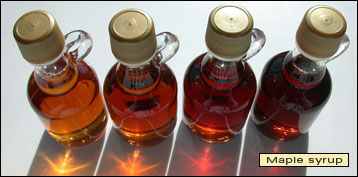
Maple Syrup (eastern Canada) – Used as a pancake syrup or cooking flavoring agent.

Montreal Bagel (Quebec Province) - A slightly sweet, junior-sized New York style bagel.

Oka Cheese (Quebec Province) – A French-style creamy, semi-soft cheese with buttery, nutty, pungent notes.

Nanaimo Bars (British Columbia) – A three-tiered cake: chocolate layer over a custardy icing layer over a crumb layer. It's cut into squares.

Pate Chinois (Quebec Province) – Literally, “Chinese Pie”. It’s like a Shepherd’s Pie, except a corn layer lies between the meat and mashed potato layers.

Planked Salmon (British Columbia) – Fillets are cooked on a wooden plank hugging a campfire.

Poutine (Quebec Province) – French fries and cheese curds are mixed together and crowned with gravy. Some call it and the Tourtiere the national dishes of Canada.

Tourtiere (Quebec Province) – Pork pie with an enveloping flaky crust. Other meats can be used, too. It is traditionally served after Christmas midnight mass.

Saskatoon Berries (Saskatchewan) – It's not a berry, but visually resembles blueberries. In taste, its milder and a bit sweeter. Used in jam, jellies, syrups, dressings, and pies.

Note: I did not include popular Canadian specialties like bannock (Indian fried bread), Belon oysters, bison (buffalo), Brome Lake duck, donairs, lobsters, and wild rice because they - or similar versions - are also associated with the cuisines of other countries. But do try them when in Canada.

Famous

Canadian beverages

Bloody Caesar - A Bloody Mary perked with clam juice. This Canadian creation is now popular around the world.

Canadian (Rye) Whisky - Nearly all are made with a blend of grains. Smoother than the American and Scotch varieties. Canadian Club is the most famous brand.

Also learn

about these exciting

world cuisines

I hope my Canadian Cuisine food & travel page

helps you enjoy your vacation, tour or trip

©2008 HQP / Hillman Quality Publications