


Famous
Vietnamese food
Food tips you can trust
Vietnam's
most famous dish
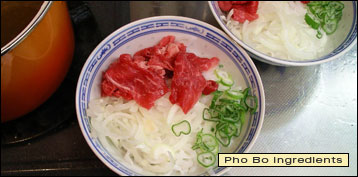
 Pho Bo
It's a certain type of noodle soup - and the one you should try first. Beef is the star ingredient. Pho Bo is enjoyed at lunch, dinner and especially breakfast. It is served in a range of venues, from humble street stalls to quality restaurants.
 Pho Bo eating ritual
A platter of fresh herbs (such as mint) and vegetables (such as bean sprouts) is set on the table for Pho Bo and other noodle soups. You select the ones you want to mix in this bowl with the broth. This lets the diner flavor the preparations to suit his personal tastes.
Ubiquitous
Shrimp rolls
The
two most
popular types
Cha Gio
This is the fried shrimp roll variety. It is made with a filling (such as minced pork) that is tightly wrapped with a thin dough sheet, then deep-fried until its crisp outside, yet still moist inside. It should be served hot. Like virtually all shrimp rolls, the diner hand-dips it into a sauce.
Goi Cuon
It's a fresh version of the shrimp roll. Its filling (usually a combination of vegetables and shelled cooked shrimp) is lightly wrapped in thin, edible, transparent rice paper. Then, it is over-wrapped with a lettuce leaf. Unlike the Cha Gio (described above), the Goi Cuon is served cold - and is soft, not crispy.
Also learn these Vietnamese
food tips and insights ...
Regional differences
More insights
Photo by Blue Lotus - CC BY 2.0


Rankings
Peasant recipes
World wonders
Also read
Site map
About me and my credentials
About my website
Reader testimonials
Email me your opinion