


Truli District
Travel tips you can trust

Why the
Trulli District
is special
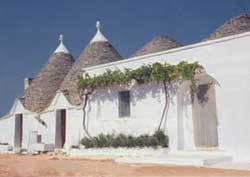
Unique cottage-like farmhouses with beehive shapes dot the heel of Italy. They traditionally have whitewashed bases, conical rock-slab roofs, and an ornamental crown.
Trulli District
tips and insights
 What is the
best Trulli area?
There is no one must-see area. Explore several Trulli areas to appreciate the variety. The small Puglian town of Alberobello is the tourist center of the Trulli District. It should be visited because it has over 1000 urban trulli. Also roam the countryside - here the trulli exude a more genuine feel.
Best months
for visiting
They are April to June and September to October. In July and August, it can be uncomfortably hot and flooded with tourists.
How far back
do trullis go?
The first trullo was built at least nine centuries ago. A 500-year-old one survives.
Now expensive
The price for a trullo has skyrocketed because they are eagerly being bought as vacation and rental-income homes.
Architecturural
styles vary
A trullo can have a round or square base. The former is the authentic shape. Today, many new trulli are built with mortar (or other binder). The true traditional trullo is built without it.
Legend tells us that trulli were made mortarless to allow residents to quickly dismantle (and later reassemble) them when the king's tax collector made his rounds. Unfinished houses were not taxed.
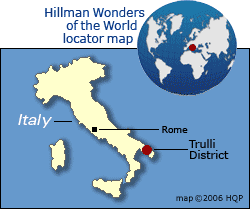
Location in Italy
Read my other Italy pages
Wonders of Italy - Complete list
Italy wonder map
Basic Italian phrases
Italian cuisine
Best time to visit Rome


World's Top 100 Wonders
World's Top 1000 Wonders
Site map
My credentials
About my website and criteria
Reader testimonials