


Pompeii
Travel tips you can trust

Why
Pompeii
is special
The ancient Roman city of Pompeii in Italy lay hidden and forgotten under the volcanic waste for over 1500 years before archaeological excavations slowly began revealing the lost city.
Pompeii tips & insights
 79 AD -
a significant year
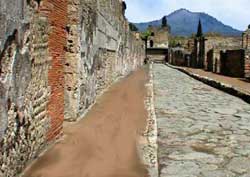
On the ill-fated day of August 24, 79 AD, Mt. Vesuvius erupted so cataclysmically that the huge volcano literally blew its top (see capless Mt. Vesuvius in photo's background).
What this
destructive force
do to Pompeii
The explosions sent a billowing column of volcanic steam, cinders and ash high into the sky. Soon the heavy aerial debris showered on and buried the once thriving Roman city of Pompeii.
Survivors
and casualties
Most of the 20,000 citizens escaped with their lives. However, about 2,000 lingered too long in gathering their valuables and died on the spot, likely by toxic volcanic fumes. Pompeii quickly changed from metropolis to necropolis.
A survivor’s account
The Roman scholar Pliny the Elder witnessed the disaster and wrote: "The thick black cloud advanced behind us like a flood. We could hear women shrieking, children crying and men shouting. Many people begged for the help of the gods, but even more imagined that there were no gods left and that the last eternal night had fallen on the world.
Pompeii today
Most of Pompeii's streets and buildings (including temples, theatres, shops, homes and public baths) have been uncovered. So have wall murals and floor mosaics depicting everyday life. Tourists and anthropologists now have a sharper idea of what daily Roman life was like.
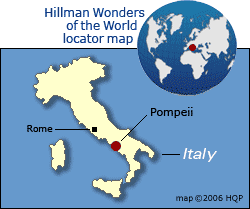
Location in Italy
Read my other Italy pages
Wonders of Italy - Complete list
Italy wonder map
Basic Italian phrases
Italian cuisine
Best time to visit Rome


World's Top 100 Wonders
World's Top 1000 Wonders
Site map
My credentials
About my website and criteria
Reader testimonials