


Santorini Volcano
Travel tips you can trust
Santorini Volcano
tips and insights
 Origin
Santorini was once a skyscraping, cone-shaped volcanic island.
21,000 BC eruption
This massive eruption blew it up. The high walls of the volcano collapsed, creating what is called a caldera. That term defines a wide ring-shaped land mass formed by the collapsed walls of a volcano. There is a large cavity in its center.
Calder Bay
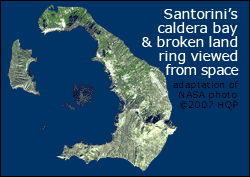
That early ring had at least one opening that allowed the Aegean Sea to surge in and fill the cavity. This created the Santorini Caldera Bay.
Subsequent powerful eruptions
One was between 1650 and 1500 BC (scientists disagree on the exact date). That eruption physically reshaped Santorini and enlarged the bay's opening to the Aegean Sea.
Last eruption
It occurred in 1950. though it was relatively minor. But recent GPS instruments suggest that a bigger one may be coming.
The satellite photo above
You can see the broken land ring and the caldera bay as they appear today. The darkish islets you see in the center of the caldera bay are small volcanoes. The largest one is named Nea Kameni Island. It rose above the water surface several centuries ago and is still active.
Learn More
 for Santorini Volcano - Page 2
Read my other
Santorini pagaes
Santorini overview
Accommodation tips
More tips
Know my other
Greece tips and insights
Greece wonders - Top 10 rankings
Greece wonder map
Basic Greek phrases for travelers
Greek cuisine


World's Top 100 Wonders
World's Top 1000 Wonders
Site map
My credentials
About my website and criteria
Reader testimonials