


Travel tips you can trust

Why the
iceberg calving of
Antarctica is special
Calving occurs when a colossal chunk of ice breaks off a thick ice shelf to become an iceberg. This natural phenomenon occurs in both polar regions, but is most awesome on Antarctica.
 Multiple locations
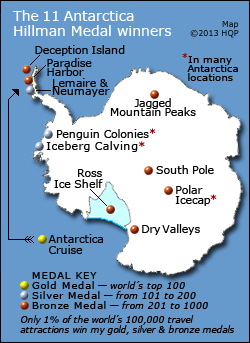
My map below pinpoints one of the foremost iceberg calving regions. However, the spectacle occurs along many Antarctica coasts.
Antarctic vs. Arctic
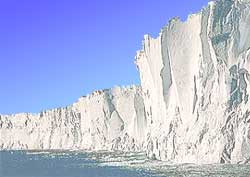
Iceberg calving is more intense in the Antarctic than in the Artic because its ice shelves (see photo) are significantly higher.
Height
Some Antarctica ice shelves rise 300 meters (1000 feet) above the water.
Danger
A calving iceberg is spectacular to see but can be dangerous because its creates a mini tsunami that's capable of capsizing a nearby boat. There's seldom any warning. When you here the telltale cracking sound, the nascent iceberg has already begun to break off the glacier's face.
Location in Antarctica
 for next Iceberg Calving page
Antarctica cruise
Deception Island
Dry Valleys
Iceberg Calving
Jagged Mountain Peaks
Lemaire & Neumayer Channels
Paradise Harbor
Penguin Colonies
Polar Icecap
Ross Ice Shelf
South Pole


World's Top 100 Wonders
World's Top 1000 Wonders
Site map
My credentials
About my website and criteria
Reader testimonials