


Bali
dance and music
Travel tips you can trust
Why the dance
and music of Bali
are special
They entertain and uplift your spirit. Both art forms have been performed and acclaimed in major cultural centers around the world. Experiencing them in Bali is the ultimate experience.
Dances of Bali
 Ramayana
Most Balinese dances relate to segments of the Ramayana, an ancient Hindu epic illustrating the perpetual struggle between good and evil.
Popular dances
The three favorite dances among locals and tourists in Bali are:
 Barong
A classic dance. Stunning. Depicts the conflict between the good Barong (dressed in a fanciful lion-like costume) and the evil Rangda.
Legong
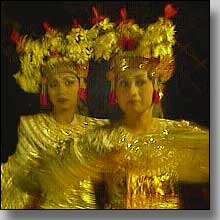
Another classic dance. Graceful. Performed by three pre-pubescent girls in colorful attire.
Kecak (monkey dance)
Although this frenetic dance was not choreographed until the 1930s (and by a Westerner), the Kecak is convincingly rooted in Balinese tradition. Typically, it features 50 to 100 bare-chested men sitting cross-legged in tight concentric circles. They play the role of monkeys, which is why the dance is sometimes called the "monkey dance". As they sway in unison, they repeatedly chant the nonsensical phrase "kechak ke chak" virtually non-stop and without musical accompaniment. They do this in a hypnotic beat to scare away an evil spirit. Several Balinese dancers help dramatize the story.
Learn More
 for Dance and Music - Page 2
Read my Bali pages

 Rice terraces
 Dance & music
 Arts & craft
 Temples
 Ubud
Ubud
 Sports
 Luxury resorts
 Kuta
Kuta
 Food
Food
 Beaches

Bali tip sheet
Bali attraction map
Best 5 nearby islands


World's Top 100 Wonders
World's Top 1000 Wonders
Site map
My credentials
About my website and criteria
Reader testimonials