


Bali's
Ubud experience
Travel tips you can trust
Why Ubud
is special
The town of Ubud in Bali is the undeniable artistic heart and soul of Bali's art. It rests among lush hills and rice terraces.
Ubud
tips and insights
 Unlike Kuta
The vacation lifestyle is markedly different from Kuta's, Bali's other major tourist magnet. Ubud is more cultural, less hedonistic.
Life proceeds at a slow pace, even for visitors, which is part of the charm. The locals are open and friendly - and you encounter few pushy vendors.
Length of stay
Day trippers from the southern beach resorts miss out on the special sense of place. You need to stay in the area for at least several days. It's an insightful, unforgettable experience.
Key
attractions
& activities in and
around Ubud
 Traditional dance
and gamelan
orchestra performances
There's a quality performance practically every night. Click dance & music for brief descriptions.
Art shops, galleries,
and studios
You find many here and in nearby villages, including in the neighboring village of Penestanam (renowned for its refreshing Young Artist School style of painting).
Museums
The area has world-class museums. Namely, the Neka, Puri Lukisan and Agong Rai. Click runners-up for brief descriptions of those institutions.
Ubud Palace
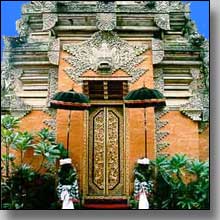
Small, walled complex of embellished buildings and courtyards smack in the middle of town.
Restaurants
Good variety to suit different tastes and wallets. Nearly all have a relaxed, unpretentious tone.
Hiking
One of Bali's best areas for short walks on scenic foot paths.
Whitewater rafting
Run the rapids down the eye-arresting Agung River gorge. Easy but challenging enough to thrill novice river rafters. Basic swimming proficiency recommended in case the rapids get the better of your rubber raft.
Doing nothing
Some visitors unwind by renting a cottage or villa with a picturesque rural view -- and hole up with a good book or companion.
Read my Bali pages

 Rice terraces
 Dance & music
 Arts & craft
 Temples
 Ubud
Ubud
 Sports
 Luxury resorts
 Kuta
Kuta
 Food
Food
 Beaches

Bali tip sheet
Bali attraction map
Best 5 nearby islands


World's Top 100 Wonders
World's Top 1000 Wonders
Site map
My credentials
About my website and criteria
Reader testimonials