


Step Pyramid
of Djoser
Travel tips you can trust

Why the
Step Pyramid of Djoser
is special
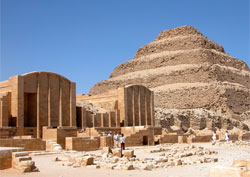
This 4,700-year-old Step Pyramid is not only visually striking, it represents a significant architectural transition from the previous Egyptian tomb styles to those of the future Great Pyramids in Giza.
Step Pyramid
tips and insights
 The transition
Previously, Pharaoh tombs were mastabas (squat, single-level, slope-sided, rectangular mounds typically made with mud brick).
The Step Pyramid is essentially six mastabas of diminishing dimensions, stacked one upon another. And, it used stone, not mud brick.
The Great Pyramids borrowed those innovations and figured out how to eliminate the step profile.
More Step Pyramid pointers
 Initially
It was 62 meters (204 feet) high and was beautifully covered with polished-smooth whitish limestone.
Underground
A three-dimensional maze of passageways and rooms extend down 32 meters (106 feet) to the burial chamber.
Ancient tomb robbers
They did a near-thorough job. The treasures are gone, as is the mummy.
Inhotep
Although it was built for Pharaoh Djoser, the architect Imhotep had a greater impact on Egypt's future. He was an early Renaissance man. Besides being the ruler's vizier, he was learned in many disciplines including medicine, art, and engineering.
Part of a complex
The funerary compound comprises chapels, courtyards, perimeter wall, smaller pyramids, and more.
Easy day trip
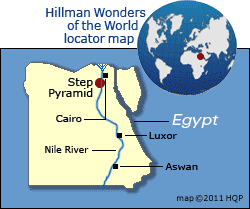
It's only 30 kilometers (20 miles) from Cairo
Location in Egypt
Read about each of Egypt's top 7
 Pyramids of Egypt at Giza
 Karnak Temple
 Nile River Cruise
 Egyptian Museum
 Valley of the Kings
 Abu Simbel
 Luxor Temple
Photo by Dennis Jarvis - CC BY-SA 2.0


World's Top 100 Wonders
World's Top 1000 Wonders
Site map
My credentials
About my website and criteria
Reader testimonials