


Knossos Palace
Travel tips you can trust
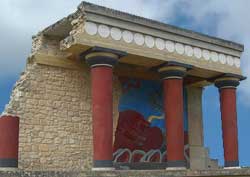

Why
Knossos Palace
on the Greek Island
of Crete is special
The Knossos Palace gives us an insight on the ancient Minoan Civilization, which was a Bronze Age trading power. It had a vast mercantile fleet with far-flung trade routes that reached more than a thousand miles from Greece.
Knossos Palace
tips and insights
 Function
Knossos Palace was likely the governmental, cultural and religious seat of the Minoan Civilization of Greece, which began around 2,000 BC.
Throne Room
is the top attraction
Knossos Palace likely had over 1,300 rooms. Among those that have been restored, the Throne Room is the tourist favorite.
How to pronounce
Knossos: nohs'-us
Greek Mythology
The mystique of Knossos Palace is enriched by ancient Greek mythology accounts, including:
 Icarus
He fell into the sea and drowned when trying to escape the palace because he flew too close to the hot sun. His artificial wings dropped off when the wax securing them melted.
The Minotaur
This half-man, half-bull monster lived and was slain in the stronghold's labyrinth.
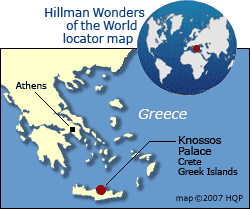
Location in Greece
Learn More
 for Knossos Palace - Page 2
Know my other
Greece tips and insights
Greece wonders - Top 10 rankings
Greece wonder map
Basic Greek phrases for travelers
Greek cuisine


World's Top 100 Wonders
World's Top 1000 Wonders
Site map
My credentials
About my website and criteria
Reader testimonials