


Mycenae
Travel tips you can trust

Why
Mycenae in Greece
is special
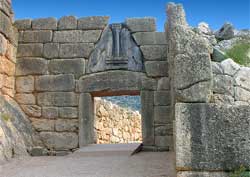
The ancient city of Mycenae in southern Greece is enveloped in a fascinating combination of myth and historical facts.
Mycenae
tips and insights
 Homer
Homer
His famous 2900-year-old epic the Iliad spins the story of the Trojan War. One key character was Agamemnon, King of Mycenae on the Peloponnesus Peninsula of Greece.
Classical Greek
mythology
It tells us of a tragic King Agamemnon tale that takes place mainly in Mycenae. It goes like this:
 Thyestes
(Agamemnon's uncle) seduces Agamemnon's mother.
Thyestes
(Agamemnon's uncle) seduces Agamemnon's mother.
To get even,
Atreus (Agamemnon's father) tricks Thyestes into eating his own children.
Thyestes
retaliates by cursing Atreus and his family.
Years later, Helen (the wife of
Agamemnon's brother Menelaus) is abducted to Troy, triggering the Trojan War.
When
Agamemnon returns to Mycenae from that long confrontation, he is murdered by his
unfaithful wife Clytemnestra.
Her
son Orestes takes revenge of his father's slaying by killing her.
That
deed of taking the life of his own mother persuades the mythical
furies to try to assassinate Orestes.
This juicy, complex drama has the earmarks of a soap opera
Heinrich Schliemann
Until 1874, most historians thought that Agamemnon and his Mycenae never existed. That was the year when the excavations by Heinrich Schliemann proved that both were real. He is the same amateur archaeologist whose earlier excavations showed that Troy was not a myth.
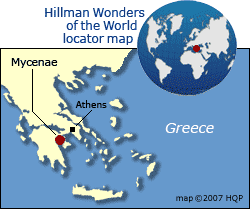
Location in Greece
Learn More
 for Mycenae - Page 2
Know my other
Greece tips and insights
Greece wonders - Top 10 rankings
Greece wonder map
Basic Greek phrases for travelers
Greek cuisine


World's Top 100 Wonders
World's Top 1000 Wonders
Site map
My credentials
About my website and criteria
Reader testimonials