


page 8
Learn about peasant cuisine
More tips (cont)

More insights (continued from page 7)
 The language barrier
It would be nice to know how to speak the local tongue in each region of the world, but since there are five thousand ethnic groups with populations of at least one million that have their own dialects, there is no way for anyone to master all of them.
Although I speak English (the best all around language for international travel) and "survival" French, German, and Spanish, I'm still literally at a loss for words in many parts of the world.
Even if I mastered Mandarin, I still would not be able to converse with the majority of the people in China - they speak different dialects.
How to overcome the
Tower of Babel predicament
Obviously the best solution - short of learning the dialect - is to bring along someone who can translate for you.
If that is not possible, tote along a good dictionary and phrase book or a smart phone or table app. Be sure it is complete with a pronunciation guide.
Also carry with you various letters of introduction that explain in the local dialect your goals and motives.
Body language
You'll also have to rely on body language, the means of communication that has been used since the days of Herodotus, Marco Polo, and other early explorers. The more you travel to exotic lands, the more adept you become at this nonverbal skill. I'm always amazed at how much a seasoned traveler can say with simple gestures and heartfelt smiles.

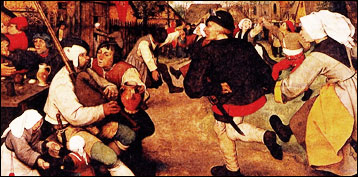
Peasant's Dance art by Pieter Bruegel the Elder


Famous peasant dishes
Arroz Con Pollo Spain
Cassoulet France
Cha Chiang Mein China
Couscous Morocco
Houskove Knedliky Czech Republic
Huevos Rancheros Mexico
Nasi Goreng Indonesia
Osso Buco Italy
Oyako Donburi Japan
Roghan Josh India
Tom Yam Kung Thailand
Vatapa Brazil
Yalanci Dolma Turkey
Peasant cuisine home page
Be peasant cuisine savvy
Be world cuisine savvy
World wonders
More
Site map
About my credentials & website
Reader testimonials
Email me your opinion