


Palace of Nations
Travel tips you can trust

Why the
Palace of Nations
is special
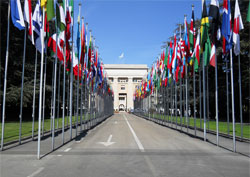
This complex in Geneva was the main headquarters of both the League of Nations and the United Nations.
Palace of Nations
tips and insights
 Setting
It sits in a picturesque park overlooking Lake Geneva and the Alps. In summer, the park (and sometimes the Palace of Nations grounds) sport roaming peacocks. They're there because the one who bestowed the land to Geneva stipulated it.
History in brief
 In
1936, the League of Nations moved in.
In
1936, the League of Nations moved in.
In
1946, the organization ceased operations and handed over the Palace of Nation's
keys to its replacement, the newly founded United Nations.
In
1950, the UN transferred its main headquarters from Geneva to New York City. At
the same time, the UN created the United Nations of Geneva (UNOG). It occupied
the Palace of Nations complex and became the headquarters for some famous
specialized UN organizations, including the one for human rights.
Size
The Palace of Nations is one of the largest building complexes in the world. Today, about 8,000 conferences and other meetings are held here. Several thousand people work at the site and about 100,000 tourists per year tour it
Try not to visit
on a workday
If a meeting is taking place in the Assembly Hall or other key room, the venue may be scratched from your tour. Weekends are your best bet.
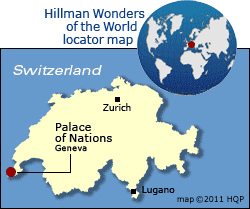
Location in Switzerland
Know these Switzerland tips and insights
Swizerland medal winners
Bern Old City
Chillon Chateau
Fribourg Old Town
Gstaad
Jungfrau Cog Railway
Lucerne Covered Bridges
Matterhorn
Palace of Nations
Thun Castle
Zurich Old Town
Rankings
Top 5 Switzerland Wonders
Photo by davehighbury - CC BY-SA 2.0


World's Top 100 Wonders
World's Top 1000 Wonders
Site map
My credentials
About my website and criteria
Reader testimonials