


Ngorongoro Crater tips
Safari pointers you can trust
Why the
Ngrongoro Crater safari
animals are special
 Many animals
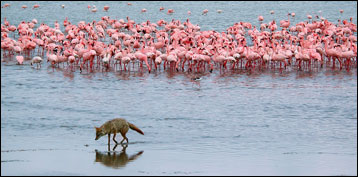
The Ngorongoro Crater has an unrivaled high density of big safari animals including lions, elephants, hippos, cape buffaloes, zebras, wildebeests, and the endangered black rhinos. It has a year-round population of approximately 30,000 large safari animals.
Where are the giraffes?
You won't see any for two reasons. First, the giraffe has long, spindly legs, which makes it difficult for it to climb into and out of the steep-walled Ngorongoro Crater (see photo). Second, nature designed the giraffe's long neck for nibbling on the leaves of tall trees, its chief food. Although such trees exist in sufficient number in the other major game reserves, they are rare here.
Always there
One of the Ngorongoro Crater's major appeals is that the animals will likely be there en masse when you are. There are no seasonal shrinkage of the game population (except during droughts). Reason: There is little need for animals to migrate. The crater's lakes, ponds and streams supply ample water - and the grasslands provide sufficient year-round food for grazers. In turn, this creates food for lions and other predators.
Great sightings
Another tourist appeal is the openness of its vast grasslands - this increases your game viewing.
Learn More
 for Ngorongoro tips - PAGE TWO
More Ngorongoro Crater advice
Best lodges and camps
Best 5 safari areas in Tanzania
Kilimanjaro side trip
Olduvai Gorge side trip
Zanzibar side trip
Ngorongoro Crater - Top 100 medal winner
Learn my other
safari tips & insights

Top 5 safaris
Top 10 safari mistakes
Kenya vs Tanzania

Botswana
Kenya
Kruger
Ngorongoro Crater
Serengeti
Tanzania

Big 5 safari animal list
Big 10 safari animal rankings
Animal facts and tidbits
What it's like on a luxury safari
Comprehensive safari locator maps
Photo by Vincenzo Gianferrari Pini - CC BY-SA 2.5

World's Top 100 Wonders
World's Top 1000 Wonders
Site map
My credentials
About my website and criteria
Reader testimonials