


TransAtlantic
essentials #2 and #3
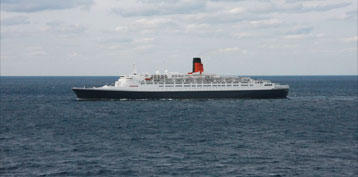
 Minimizing rough seas
The good news is the North Atlantic is typically smooth sailing from April to October. The bad news is occasionally this ocean becomes stormy with gale-force winds, heavy downpours, and huge waves.
The good news is the North Atlantic is typically smooth sailing from April to October. The bad news is occasionally this ocean becomes stormy with gale-force winds, heavy downpours, and huge waves.
But you can significantly increase the odds in your favor by knowing the following:
 Northern
vs southern route
Northern
vs southern route
The northern route (such as New York to England) is more prone to bad weather than the southern one (such as Florida to the Mediterranean). And the Northern route can be too cold for using the pool in the spring.
Type of ship
Larger and newer ships are usually designed to handle rough seas.
 Sail westward or eastward?
Sailing west (Europe to the Americas) is superior to cruising eastbound. Consider:
25-hour days
You get an extra hour to enjoy the ship each day the captain adjusts the ship's clock forward. Heading eastbound, you would have 23-hour days.
Jet lag
If you sail westbound, you would fly from the Americas to Europe - and those flights are typically night ones. This makes it easier for you to sleep on the plane and, therefore, reduce the jetlag effect.
 for what to know #
for more TransAtlantic cruise tips
Learn these
cruise tips
Best cruise lines by category
29 cruise lines - descriptions
Top 10 destinations
Cabin selection
Cruise costs
Booking advice
Shore excursions
Cruise pros & cons
Cruise dining insights
Family cruising
Cruise etiquette
Ship communications
Cruise industry - facts
More cruise tips/insights
Photo by Bruce Tuten - CC BY 2.0

Cruise Lines International Association

World's Top 100 Wonders
World's Top 1000 Wonders
Site map
My credentials
About my website and criteria
Reader testimonials