


Museum
at Halicarnassus
seven wonders
insights you can trust

Why the
Mausoleum at Halicarnassus
Seven Wonder is special
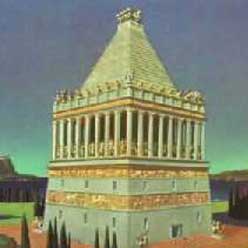
The 4th century BC Mausoleum at Halicarnassus was not only imposing, it was ornately decorated (see picture) with columns and statues. The step-pyramid roof of this Seven Wonder was crowned with a large dramatic sculpture of four horses pulling a chariot carrying the King Mausolus and his Queen Artemisia.
The marble tomb was as high as a modern 14 story building and, from its strategic hillside location, overlooked Halicarnassus (now named Bodrum) and its bay.
Why the Mausoleum at
Halicarnassus was built
 Queen
Artemisia's role
Queen
Artemisia's role
She commissioned the Mausoleum at Halicarnassus in 353 BC for her husband, King Mausolus. In tribute to him, Queen Artemisia spared little expense in hiring some of the best craftsmen and sculptors of her day.
King Mausolus
He was just an average provincial ruler of the vast Persian Empire 2300 years ago. His life would not have made him famous in history. His dead body did.
Queen
Artemisia
She died two years after her husband (and brother) King Mausolus. She was buried along side him in the Mausoleum of Halicarnassus.
The Seven Wonder tomb wasn't quite finished when Queen Artemisia died. The builders decided to finish the building project because, according to the Roman historian Pliny, the tomb was not just a memorial to the royal couple, but also to the sculptor's art.
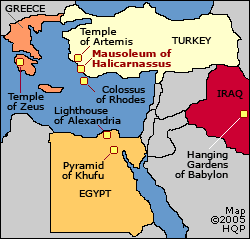
Mausoleum
at Halicarnassus'
map location
Learn More
 for
for
Mausoleum of Halicarnassus - Page 2
Learn my other
Seven Wonders tips & insights

Colossus of Rhodes
Hanging Gardens
Lighthouse of Alexandria
Mausoleum of Halicarnassus
Pyramid of Khufu
Statue of Zeus
Temple of Artemis

Pyramids of Egypt -1
Great Wall of China - 2
Taj Mahal -3
Serengeti Migration -4
Galapagos Islands -5
Grand Canyon -6
Machu Picchu -7

The 5 major ancient list flaws
10 amazing facts

World's Top 100 Wonders
World's Top 1000 Wonders
Site map
My credentials
About my website and criteria
Reader testimonials