


Chichen Itza
Travel tips you can trust
Why
Chichen Itza
is special
Chichen Itza is the best preserved of the many Mayan ruins in Mexico and Central America.
Top 5
must-see
Chichen Itza
attractions
 El Castillo
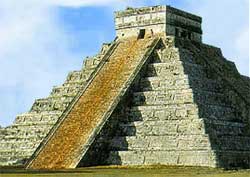
This structure (see photo above) is by far the tourism star of Chicken Itza. This high pyramid temple dominates the entire site and has become the visual symbol of Chichen Itza. The name El Castillo (the castle) was bestowed by the 16th century Spanish conquistadores. The ancient name is Kukulcan.
 Temple of the Warriors
A striking forest of stone columns surround this large structure. It is decorated with relief carvings of warriors
 Ball Court
Without using their hands or feet, players had to fling a ball through one of the stone rings attached high on the wall. Pictorial evidence suggests that the team captain was sometimes beheaded, but doesn't indicate whether he led the winning or losing team.
 Cenote
A cenote is a sinkhole. The one named Sacred Cenote in Chichen Itza is remarkably wide and deep. This circular pit served as a water source for the population. Treasures (and perhaps humans) were tossed into the cenote's pool to win the goodwill of the gods
 El Caracol
An astronomical observatory with a circular tower. Its functions included identifying the precise time of the equinoxes for religious and agricultural purposes. I will also remember waking up early one morning and seeing El Caracol dramatically framed by my hotel-room window.
Runners-up
Other worthy Chichen Itza must-sees include the Nunnery, High Priest's Tomb, and Temple of the Jaguars.
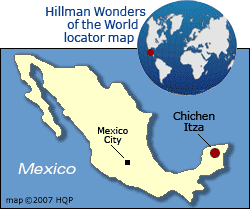
Chichen Itza
location in Mexico
Learn More
 for Chichen Itza - Page 2
Learn my other
Mexico tips and insights
Wonders of Mexico
Acapulco
Calakmul
Chichen Itza
Copper Canyon
Mitla
Monte Alban
Natl Mus of Anthropology
Palenque
Parque la Venta
San Miguel de Allende
Taxco
Teotihuacan
Uxmal
Related pages
Mexico wonders - Top 10 rankings
Mexico wonder map
Basic Spanish phrases for travelers
Mexican cuisine

Visit Mexico - Official tourism website

World's Top 100 Wonders
World's Top 1000 Wonders
Site map
My credentials
About my website and criteria
Reader testimonials