

|

Why Teotihuacan
is special
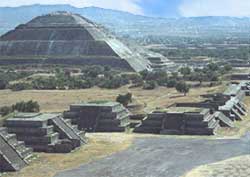
Teotihuacan is an extensive ancient religious complex near Mexico City. Its many architectural marvels include
the enormous Pyramid of the Sun (see photo), one of the grandest monuments ever erected.

Mysterious origins
of Teotihuacan

It likely dates back to the early 2nd Century BC. However, little is known about the ancient people who built
it a thousand years before the Aztecs came into power.

Pronouncing
Teotihuacan

tay'-uh-tee'-wah-kahn

The Pyramid
of the Sun

It's as high as a modern 20-story building, making it the tallest structure in Teotihuacan.

Some archaeologists estimate that the Pyramid of the Sun is at least
2,000 years old.

No one knows for sure it's original purpose or to whom the
Pyramid of the Sun it was dedicated (the
"sun" designation was bestowed by the Aztecs).

The Moon edifice
at Teotihuacan

At the far end of the main thoroughfare sits the Pyramid of the Moon (named by but not erected by
the Aztecs). It's almost as big as the Pyramid of the Sun and would be world famous if the latter didn't
exist.

Though shorter, it is harder to climb because its step height is
appreciably steeper. Once on top, though, you have the best view of the ancient Teotihuacan complex.

Quetzalcoatl

This is the third major archaeological attraction of Teotihuacan. It's known for its fanciful serpent
sculptures.

Getting to
Teotihaucan

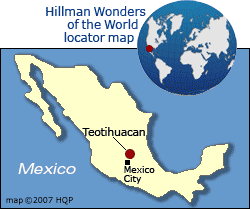
It is located roughly 50 kilometers (30 miles) northeast of the center of Mexico
City. The trip takes an hour or less by bus or car.

Tips & insights on
Teotihaucan

Wear
comfortable shoes because Teotihuacan is vast. Even exploring just the
highlights requires substantial walking.

Another
physical exertion: The high altitude can make step climbing fatiguing.

Summer middays can be
sweltering, so come early or late to avoid the heat (and crowds).

Early is
preferable to late because thunderstorms occur more frequently in the afternoon.

In the wintertime, the
temperature can become nippy and a bit raw.

Teotihuacan is best
photographed in the early morning and late afternoon light (for
contrasting shadows).

The population
estimates of Teotihuacan in its glory days generally range between 75,000 to 200,000. Those figures would make
it one of the world’s largest cities in its time.

After its prime
time (from around 200 BC to 350 AD), Teotihuacan slowly deteriorated
physically and in spirit over the next several centuries, then died.

The Teotihuacan moniker was coined
by the invading Aztecs, relative newbies. They did not take possession of the complex
until a relatively short time before Cortez invaded Mexico in the 16th century. That was
nearly a millennium after the original builders abandoned their religious and commercial center.

The
Aztecs used the top of the Pyramid of the Sun as an altar for sacrificing captives of war to the solar
god. The hapless souls were marched huffing and puffing up the 247 steep steps to have their hearts
ceremoniously ripped out by a priest and their heartless bodies unceremoniously tossed down the sheer sides of
the Pyramid of the Sun.


View my other gold,
silver & bronze medal
winners in Mexico
 

My phrase guide
for travelers
What every visitor should know.


My Mexican
cuisine guide


View my next top 100
Wonders of the World


 |