


Banaue Rice Terraces
Travel tips you can trust

Why the
Banaue Rice Terraces
are special
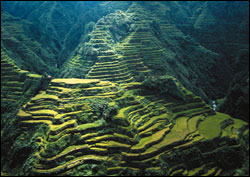
While other Asian countries also have photogenic rice terraces, I have never seen one that matches the sheer scale and grandeur of the Banaue Rice Terraces.
Best time to visit
the Banaue Rice Terraces
 Winter
to early spring
Winter
to early spring
This is ideal sightseeing period. During the rainy season (summer and fall), low lying clouds can disappointingly mask the slopes. And landslides (especially in July and August) occasionally block roads.
Banaue Rice Terraces
size and history
Size
The mountainous rice terraces of Banaue and vicinity in the Philippines are mankind's grandest scaled engineering feat. The vertical distance between bottom and top rows exceeds the height of the world's tallest building. If the terraces were laid end to end, they would stretch more than half way around the world.
History
The Banaue Rice Terraces were carved over a 2,000 year span with primitive handtools by the ancestors of the current farmers, the Ifugao tribesmen.
Eroding rice terraces
They are facing erosion because of a decline in upkeep. A big reason is some of the young tribespeople are abandoning their family lands to find less arduous jobs elsewhere.
Learn More
 for Banaue Rice Terraces - Page 2
Learn my other
Philippine tips and insights
Top 7 Philippine Wonders
Philippine wonder map
Philippine wonder photo gallery
Best time to visit Manila
Banaue Rice Terraces
Chocolate Hills
Mayon Volcano
Pamalican Island
Taal Volcano
Tubbataha Reef
Underground River
Honorable mentions
Batad & Bangaan terraces
Banaue Rice Terraces photo gallery
Banaue Festival photo gallery
Country facts & tidbits
Learn Filipino/Tagalog phrases
Philippine cuisine

Philippine Department of Tourism
WOW Philippines

World's Top 100 Wonders
World's Top 1000 Wonders
Site map
My credentials
About my website and criteria
Reader testimonials