


Mayon Volcano
Travel tips you can trust

Why the
Mayon Volcano
is special
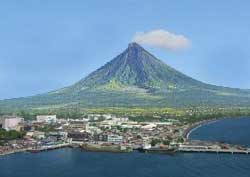
Mayon Volcano has a near-perfect cone shape, endowing it with symmetrical beauty. You can see all of its grandeur, from base to summit, because it sits alone above a vast sloping plane.
Mayon Volcano
tips and insights
 Mayon Volcano
is still active
Almost 50 other eruptions occurred over the past 400 years. That's an average of one every eight years. The latest eruption (2013) took the lives of some climbers.
Most deadly eruption
It happened in 1814. Over 1,200 people perished. Most of them took refuge in the church in Cagsawa. Unfortunately, lava and mud flows plus airborne ash and rock fragments buried the church. Today, only the church's reclaimed bell tower bears physical testimony to the resulting tragedy. It is now a popular travel attraction.
Near-perfect shape
But Mayon is not the world's only near-perfect cone volcano. Other famous ones include Mount Fuji in Japan and Osomo in the Argentine-Chilean Lake District.
Photo op
The church bell tower offers a striking photo opportunity: The Mayon Volcano flanked by the lonely historic tower poking out of the ground.
Learn More
 for Mayon Volcano - Page 2
Learn my other
Philippine tips and insights
Top 7 Philippine Wonders
Philippine wonder map
Philippine wonder photo gallery
Best time to visit Manila
Banaue Rice Terraces
Chocolate Hills
Mayon Volcano
Pamalican Island
Taal Volcano
Tubbataha Reef
Underground River
Honorable mentions
Batad & Bangaan terraces
Banaue Rice Terraces photo gallery
Banaue Festival photo gallery
Country facts & tidbits
Learn Filipino/Tagalog phrases
Philippine cuisine

Philippine Department of Tourism
WOW Philippines

World's Top 100 Wonders
World's Top 1000 Wonders
Site map
My credentials
About my website and criteria
Reader testimonials