


American cuisine -
its bad and good
Food tips you can trust
The bad and good
aspects of American cuisine
 Split personalities
American cuisine has both a dull and exciting side:
 Dull = Fast foods
and overly processed grocery-store foods
Dull = Fast foods
and overly processed grocery-store foods
Exciting = Regional and
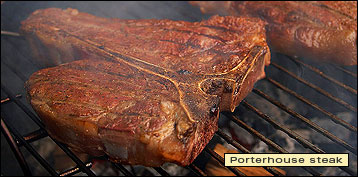
ethnic cooking - and steaks
The 3 great aspects
of American cuisine
 Regional and ethnic cooking
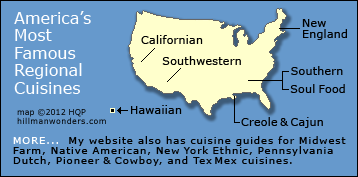
Click blue links to learn my candid tips about them:
California
Cowboy + Pioneer
Creole & Cajun
Hawaiian
Native American
New England
Penn Dutch + Midwest farm
Soul Food
Southern
Southwestern
Tex Mex + New York Ethnic
 Innovation
American cuisine is the most innovative major cuisine on our planet. This is not because Americans cooks are naturally more creative than their counterparts abroad. They're not. A prime reason is the nation's cuisine is relatively new. It is not as encumbered by ironbound culinary rules as in, say, the French and Chinese cuisines. The Americans have more freedom to experiment.
This has been particularly true with the regional Southwestern, Californian, and Hawaiian cuisines.
 Land of plenty
America has so much land suitable for farming that it could support twice its population.
The arable land that could be used for agriculture is not wasted. Much of it is used by the cattle industry (which requires extensive grazing land). This has allowed meat eating to become a significant factor in American cuisine.
Learn More
 for Top 10 Famous American Foods


Rankings
Peasant recipes
World wonders
Also read
Site map
About me and my credentials
About my website
Reader testimonials
Email me your opinion