


Galapagos
top 5 birds
# 4 and 5
Click FIRST PAGE for bird
rankings # 


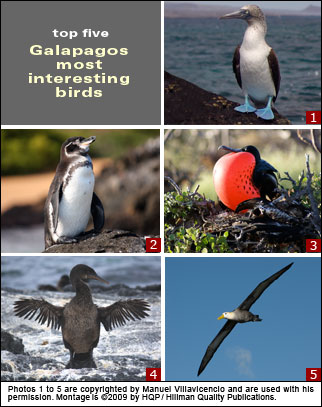
 Flightless cormorants

 Through a slow
evolutionary process, the wings of these birds gradually shrank.
Through a slow
evolutionary process, the wings of these birds gradually shrank.
This
occurred so that the body would become more streamlined and therefore
swim faster underwater in quest of its chief food: bottom-fishes,
octopuses and eels.
The wings atrophied
so much that the bird could no longer fly. That poses no concern because
there are no land-based natural predators around to fly away from.
After
fishing, the flightless cormorant stretches out its stunted wings to
dry them (see photo).

Fernandina and Isabela.
Waved albatross
These sizable
birds can live up to 50 years.
They have one
of the world's largest wing spans (up to 2.5 meters or 8 feet).
To
see the waved albatrosses in the Galapagos, come between April
and December (they are gone from January to March.)
Waved
albatrosses can cruise-glide the South Pacific thermals searching
for surface fish for over a year without ever landing on
water or land.
Espanola (almost all the world's waved albatrosses breed and nest on this island).
Click blue links
for more more bird tips
FIRST PAGE for bird
rankings #
MORE BIRDS for runners-up list



Best Galapagos ships by category
Boat type - pros & cons
Itinerary tips
Cost and booking tips

Best time to go
Getting there tips
Packing tips
Snorkeling tips
Diving tips
Some more helpful tips

Top 5 land & shore wildlife
Top 5 birds
Top 5 marine life

Charles Darwin - Brief bio
Interesting Galapagos facts
Celebrity Xpedition

World's Top 100 Wonders
World's Top 1000 Wonders
Site map
My credentials
About my website and criteria
Reader testimonials