


Creole and Cajun
cuisines
page 3
Creole and
Cajun
cuisines
tips and insights
 Cajun food myths
In the 1980s some out-of-state food writers and Cajun restaurants spread misconceptions about Cajun food that linger on:
 “It is as hot as Tex-Mex foods.”
Fact: Cajun cooks enthusiastically season with chili, but not to a palate-scorching degree.
“Blackened Redfish is Cajun.”
Fact: It was invented several decades ago in a New Orleans restaurant catering to local residents and tourists.
“Turducken is a Cajun specialty.”
Fact: The conversation-piece Turducken preparation (a de-boned chicken inside a de-boned duck inside a de-boned turkey) is not a traditional Cajun dish.
Location
New Orleans is the home of Creole cuisine. Just east lies the heart of the secluded bayous, Cajun territory.
How Creole and
Cajun cuisines differ
Originally, the neighboring Creole and Cajun cuisines were markedly different. Over the centuries, the distinctions between the two blurred as cooks on both sides adopted each other's dishes.
However, food mavens can spot the unique qualities because the cooks of each cuisine modified the borrowed dishes in keeping with their culinary heritage.
Generally, Creole cuisine is urbane while Cajun cuisine is country style. Take Jambalaya as an illustration. The Creole version is more citified and complex, the Cajun, more down-home and straightforward. Both are delicious.
Origin
Creole cuisine was fashioned by early French and Spanish immigrants, and by African slaves. Cajun cuisine was created by the French Acadians (later shortened to Cajuns) and by major contributions from Native Americans.
Different lifestyles
Creole cuisine materialized in New Orleans, a city with sophisticated tastes inherited from its refined French and Spanish immigrants. Black slave cooks added their creative touches. Elaborate sauces and complex cooking methods ensued.
In contrast, Cajun cuisine emerged among a people who lived a hard life in the bayous, with a limited variety of cooking ingredients. They had to make do with what they had. An unfussy, down-home style of cooking emerged, without culinary bells and whistles. Yet, like New Orleans residents, they developed a splendid cuisine because they loved and demanded good cooking.
Learn More
 for first Creole and Cajun page
Learn my American tips
and insights on these pages
Click blue links
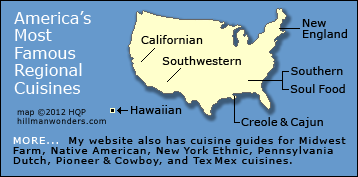
America's 7 most famous
regional cuisines
California
Creole & Cajun
Hawaiian
New England
Soul Food
Southern
Southwestern
Other renowned
American cuisines
Cowboy
New York Ethnic
Midwest farm
Native American
Penn Dutch / Amish
Pioneer
Tex Mex
Related pages
Top 10 Famous American foods
American cuisine - The bad and good
American city specialties
USA production science
Top 10 travel wonders of America
Photo by Janke - PD


Rankings
Peasant recipes
World wonders
Also read
Site map
About me and my credentials
About my website
Reader testimonials
Email me your opinion